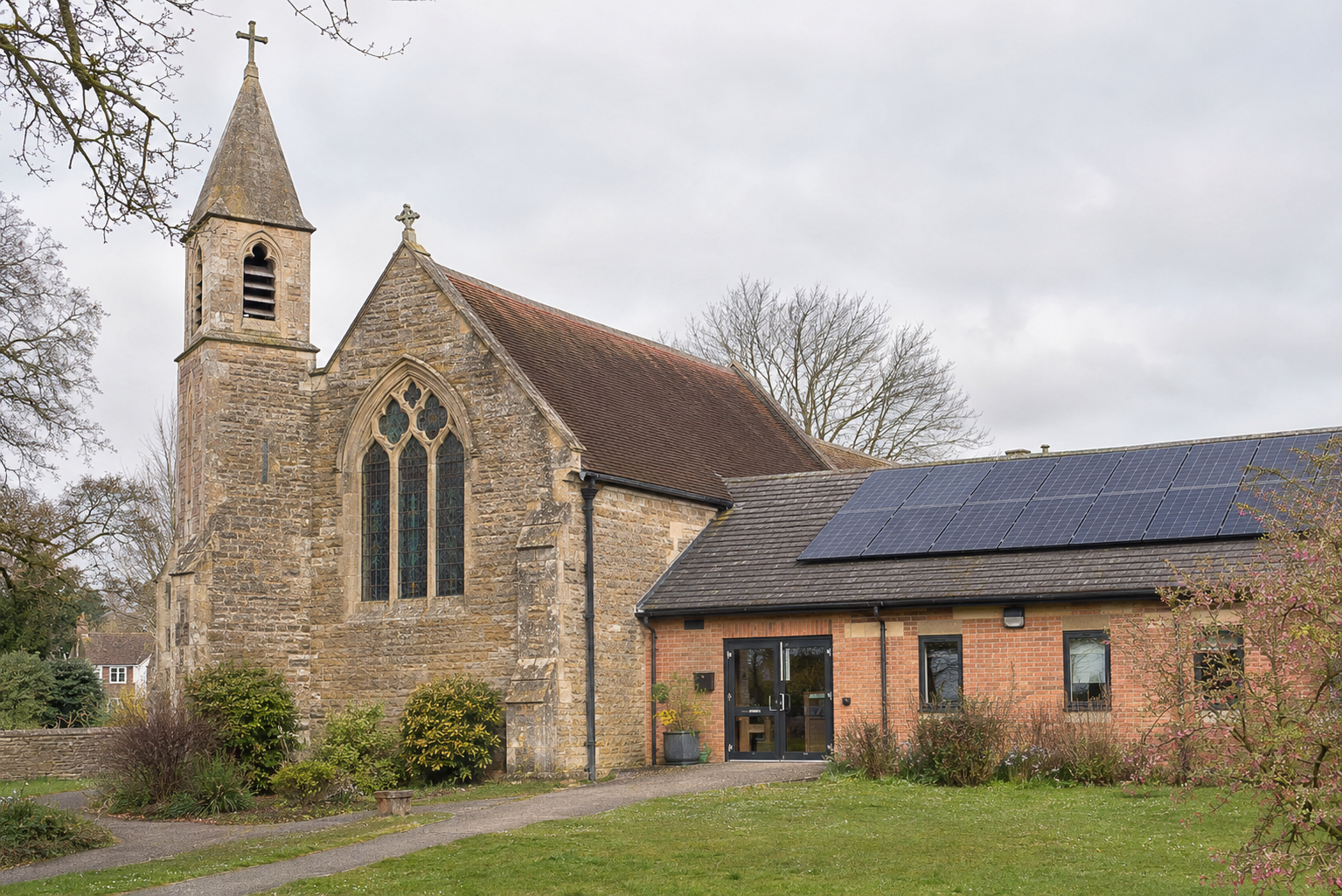
Could your place of worship or community building spend less on electricity?
We review your bills, available space and current equipment to compare practical options, such as solar, a battery or both.

A DECISION BASED ON YOUR BUILDING
What could work for your building?
The assessment guides the choice and size of the system, including whether better use of existing equipment could be enough.
Use what you have
A tariff, control setting or operating change may be enough to improve the current arrangement.
Add solar
We check usable roof or land against likely generation and how much power the building can use.
Add storage
We compare evening demand and tariff periods with the cost of storing power for later.
Pair solar and storage
We test the battery’s added cost against the value of shifting surplus generation into later use.
We put the current bill alongside the full cost of each route, including energy and any ongoing payments or fees.
FUNDING OPTIONS
What would a funded option cost your building?
Funding may be available for eligible sites. We compare what the building pays, who owns the equipment and who is responsible for it. Your trustees can review the annual payments, contract term, export income and what happens if the building uses less electricity.
ILLUSTRATIVE EXAMPLE · ANNUAL COSTS
Current electricity costs
£6,000
Electricity bought from the grid with funding
£4,500
Funding and service payments
£900
Total cost with the funded option
£5,400
Illustrative annual saving
£600 (10%)
Example figures only. A third party funds installation and owns the equipment. The hall receives no export income. The £900 includes all assumed annual funding, service payments and fees. Your assessment uses the building’s own data and proposed terms.
ILLUSTRATIVE EXAMPLE
Make better use of renewable energy.
A village hall may generate surplus solar electricity at lunchtime. A battery could store some of it to help light the hall during evening classes.
A village hall through the day
Illustrative only — the site’s data will show its real pattern
12:30
Solar may exceed use while rooms are quiet.
CHECK
Could a battery shift some power to later?
18:00
Groups arrive; kitchen and lights switch on.
We compare meter readings, tariffs and the full battery cost. Any emissions estimate needs its own calculation, including charging patterns and losses.
ILLUSTRATIVE EXAMPLE · EVENING ELECTRICITY
If the hall spent £800 instead of £1,000 a year on electricity bought for evening use, that would be 20% less on those purchases, before battery payments.
Support your community.
Lower energy costs could help keep classes, meals and advice sessions affordable. Your trustees decide how to use any verified savings.
Tell us which activities and opening hours matter most. The assessment should consider access during worship and community use, and flag any permissions needed.
A PRACTICAL NEXT STEP
Request a site assessment
Find out which options are worth exploring for your building, with a clear comparison for your committee.
01
Review your bills
Share a recent bill and tell us when the building is busiest.
02
Explore the site
We check usable space, existing equipment and connection limits.
03
Compare options
Compare solar, battery storage or both with your current energy costs.
Share a little about the site
We’ll use this to arrange a useful first conversation.
We’ll confirm the assessment scope, any fee and the information needed before proceeding.
Your name
Enter your name
Organisation
Your organisation
Work email
name@example.org
Postcode
e.g. SW1A 1AA
Building type
Church, mosque, community hall…
Request a site assessment
Prefer email? Contact export@open-power.co.uk
Empowering small-scale generators everywhere
Open Power is a trading name of Hexapower Limited, registered in England and Wales under company number 14543090.
Registered office: Open Power, Renold Building 81, Sackville Street, Manchester, England, M1 3NJ.
Could your place of worship or community building spend less on electricity?
We review your bills, available space and current equipment to compare practical options, such as solar, a battery or both.

A DECISION BASED ON YOUR BUILDING
What could work for your building?
The assessment guides the choice and size of the system, including whether better use of existing equipment could be enough.
Use what you have
A tariff, control setting or operating change may be enough to improve the current arrangement.
Add solar
We check usable roof or land against likely generation and how much power the building can use.
Add storage
We compare evening demand and tariff periods with the cost of storing power for later.
Pair solar and storage
We test the battery’s added cost against the value of shifting surplus generation into later use.
We put the current bill alongside the full cost of each route, including energy and any ongoing payments or fees.
FUNDING OPTIONS
What would a funded option cost your building?
Funding may be available for eligible sites. We compare what the building pays, who owns the equipment and who is responsible for it. Your trustees can review the annual payments, contract term, export income and what happens if the building uses less electricity.
ILLUSTRATIVE EXAMPLE · ANNUAL COSTS
Current electricity costs
£6,000
Electricity bought from the grid with funding
£4,500
Funding and service payments
£900
Total cost with the funded option
£5,400
Illustrative annual saving
£600 (10%)
Example figures only. A third party funds installation and owns the equipment. The hall receives no export income. The £900 includes all assumed annual funding, service payments and fees. Your assessment uses the building’s own data and proposed terms.
ILLUSTRATIVE EXAMPLE · NOT A CUSTOMER RESULT
Make better use of renewable energy.
A village hall may generate surplus solar electricity at lunchtime. A battery could store some of it to help light the hall during evening classes.
The test: would storage reduce the annual cost after all battery payments? If it doesn’t, we’ll say so.
ILLUSTRATIVE EXAMPLE · EVENING ELECTRICITY
If the hall spent £800 instead of £1,000 a year on electricity bought for evening use, that would be 20% less on those purchases, before battery payments.
A village hall through the day
Illustrative sequence — the site’s meter data will show its real pattern
12:30 · QUIET
Solar surplus
Panels may export while rooms are lightly used.
THE BATTERY TEST
Store some for later?
Would evening use justify the full cost?
18:00 · BUSY
Cooking class + group
Lights and kitchen equipment switch on.
WHAT WE’D CHECK
We compare meter readings, tariffs and the full battery cost. Any emissions estimate needs its own calculation, including charging patterns and losses.
Support your community.
Lower energy costs could help keep classes, meals and advice sessions affordable. Your trustees decide how to use any verified savings.
Tell us which activities and opening hours matter most. The assessment should consider access during worship and community use, and flag any permissions needed.
A PRACTICAL NEXT STEP
Request a site assessment
Find out which options are worth exploring for your building, with a clear comparison for your committee.
01
Review your bills
Share a recent bill and tell us when the building is busiest.
02
Explore the site
We check usable space, existing equipment and connection limits.
03
Compare options
Compare solar, battery storage or both with your current energy costs.
Share a little about the site
We’ll use this to arrange a useful first conversation.
We’ll confirm the assessment scope, any fee and the information needed before proceeding.
Your name
Enter your name
Organisation
Your organisation
Work email
name@example.org
Postcode
e.g. SW1A 1AA
Building type
Church, mosque, community hall…
Request a site assessment
Prefer email? Contact export@open-power.co.uk
Empowering small-scale generators everywhere
Open Power is a trading name of Hexapower Limited, registered in England and Wales under company number 14543090.
Registered office: Open Power, Renold Building 81, Sackville Street, Manchester, England, M1 3NJ.
Could your place of worship or community building spend less on electricity?
We review your bills, available space and current equipment to compare practical options, such as solar, a battery or both.
A DECISION BASED ON YOUR BUILDING
What could work for your building?
The assessment guides the choice and size of the system, including whether better use of existing equipment could be enough.
Use what you have
A tariff, control setting or operating change may be enough to improve the current arrangement.
Add solar
We check usable roof or land against likely generation and how much power the building can use.
Add storage
We compare evening demand and tariff periods with the cost of storing power for later.
Pair solar and storage
We test the battery’s added cost against the value of shifting surplus generation into later use.
We put the current bill alongside the full cost of each route, including energy and any ongoing payments or fees.
FUNDING OPTIONS
What would a funded option cost your building?
Funding may be available for eligible sites. We compare what the building pays, who owns the equipment and who is responsible for it. Your trustees can review the annual payments, contract term, export income and what happens if the building uses less electricity.
ILLUSTRATIVE EXAMPLE · ANNUAL COSTS
Current electricity costs
£6,000
Electricity bought from the grid with funding
£4,500
Funding and service payments
£900
Total cost with the funded option
£5,400
Illustrative annual saving
£600 (10%)
Example figures only. A third party funds installation and owns the equipment. The hall receives no export income. The £900 includes all assumed annual funding, service payments and fees. Your assessment uses the building’s own data and proposed terms.
ILLUSTRATIVE EXAMPLE · NOT A CUSTOMER RESULT
Make better use of renewable energy.
A village hall may generate surplus solar electricity at lunchtime. A battery could store some of it to help light the hall during evening classes.
The test: would storage reduce the annual cost after all battery payments? If it doesn’t, we’ll say so.
ILLUSTRATIVE EXAMPLE · EVENING ELECTRICITY
If the hall spent £800 instead of £1,000 a year on electricity bought for evening use, that would be 20% less on those purchases, before battery payments.
A village hall through the day
Illustrative sequence — the site’s meter data will show its real pattern
12:30 · QUIET
Solar surplus
Panels may export while rooms are lightly used.
THE BATTERY TEST
Store some for later?
Would evening use justify the full cost?
18:00 · BUSY
Cooking class + group
Lights and kitchen equipment switch on.
WHAT WE’D CHECK
We compare meter readings, tariffs and the full battery cost. Any emissions estimate needs its own calculation, including charging patterns and losses.
Support your community.
Lower energy costs could help keep classes, meals and advice sessions affordable. Your trustees decide how to use any verified savings.
Tell us which activities and opening hours matter most. The assessment should consider access during worship and community use, and flag any permissions needed.
A PRACTICAL NEXT STEP
Request a site assessment
Find out which options are worth exploring for your building, with a clear comparison for your committee.
01
Review your bills
Share a recent bill and tell us when the building is busiest.
02
Explore the site
We check usable space, existing equipment and connection limits.
03
Compare options
Compare solar, battery storage or both with your current energy costs.
Share a little about the site
We’ll use this to arrange a useful first conversation.
We’ll confirm the assessment scope, any fee and the information needed before proceeding.
Your name
Enter your name
Organisation
Your organisation
Work email
name@example.org
Postcode
e.g. SW1A 1AA
Building type
Church, mosque, community hall…
Request a site assessment
Prefer email? Contact export@open-power.co.uk
Empowering small-scale generators everywhere
Open Power is a trading name of Hexapower Limited, registered in England and Wales under company number 14543090.
Registered office: Open Power, Renold Building 81, Sackville Street, Manchester, England, M1 3NJ.